REVIEW · ANTALYA
Antalya: Pamukkale Hot Springs & Hierapolis Small Group Tour
Book on GetYourGuide →Operated by TOURMANIA · Bookable on GetYourGuide
White terraces and ancient ruins in one long day. This Antalya to Pamukkale and Hierapolis outing turns the cotton-castle travertines and UNESCO site into a tight, well-paced sightseeing day, with an expert guide filling in the why behind the wow.
I like the combo: you get to walk Pamukkale’s snow-white terraces and then switch gears to Hierapolis’ temples, gates, and theater. I also like that the stops are built around time outside the bus, not just photo moments, so you can actually enjoy places like the Necropolis and the thermal pools at a human pace. The main drawback is the day is stretched by a long drive, and Cleopatra’s Antique Pool access has been temporarily limited because of renovations (so don’t plan on swimming there).
In This Review
- Quick take: what makes this tour worth your time
- Pamukkale cotton terraces and Hierapolis: what this day trip really delivers
- Price and logistics: what the $50 covers (and what it doesn’t)
- Early pickup from Antalya (Konyaaltı) and the long drive factor
- Denizli Province: how the day gets organized before Pamukkale
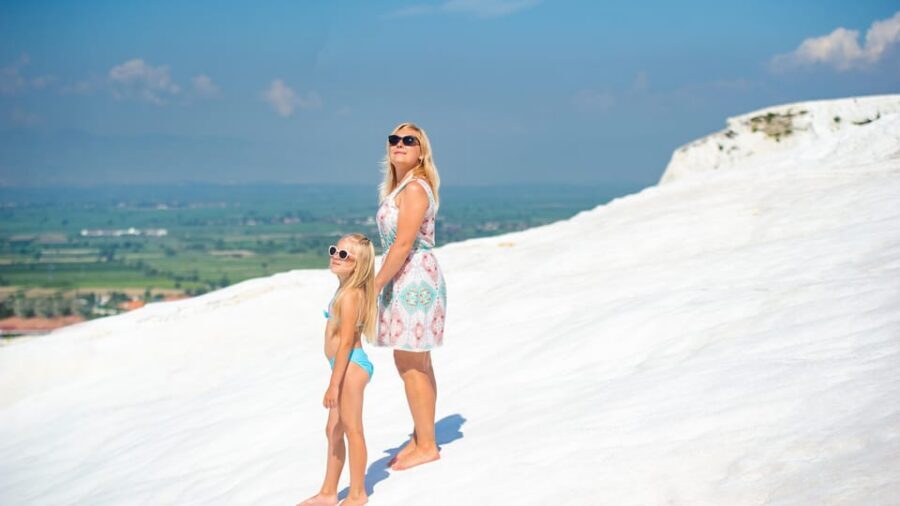
- Pamukkale Hot Springs and the cotton-castle terraces
- Thermal pools: foot baths, small pools, and 30°C comfort
- Hierapolis: stepping through the holy city’s ruins
- Temple of Apollon, Domitian Gate, and the story behind the stone
- Necropolis of Hierapolis: the quieter, more moving part
- Cleopatra’s Antique Pool: what to do when it’s closed
- Lunch at Pamukkale: included, filling, and easy on decision fatigue
- Shopping in Denizli: how it fits without hijacking the day
- What I’d bring (and what I’d avoid) for comfort
- Should you book the Antalya Pamukkale & Hierapolis small group tour?
- FAQ
- How long is the Antalya to Pamukkale and Hierapolis tour?
- Where does pickup happen?
- Is lunch included?
- What tickets or entrance fees are not included?
- Can I swim at Pamukkale during this tour?
- Is Cleopatra’s Antique Pool included?
- What should I bring for the day?
- Is there a guide and language offered?
Quick take: what makes this tour worth your time
- Pamukkale travertines first-class photo walking: you’ll get time on the terraces and thermal area, not just a quick look.
- Real Roman/Greek context in Hierapolis: expect guided stops at big landmarks like the Apollon Temple and Domitian Gate.
- Thermal pools are weather-dependent: access to smaller hot pools can vary, so pack for both sun and a bit of cold.
- Lunch is included (with vegetarian option): it takes the pressure off meal planning during a 12-hour day.
- Extra costs are real: Pamukkale and Hierapolis entrance fees aren’t included (listed as €30), and drinks cost extra.
Pamukkale cotton terraces and Hierapolis: what this day trip really delivers
This is the kind of trip that’s easy to picture and hard to summarize. One moment you’re staring at those falling white calcium terraces at Pamukkale. The next, you’re standing inside the bones of a Hellenistic and Roman spa city called Hierapolis, with ruins that stretch across kilometers.
The best part is how the day flows. The route is structured so you’re not rushing between random stops. You’re building a story: thermal springs → ancient spa life → the holy city that grew beside it → the tombs that followed. If you’re in Antalya and you want one truly classic Turkey day trip, this is it.
And yes, it’s a long day. The drive from Antalya to Pamukkale runs about 235 km, so you’re committing to time on the road. But when the program has strong guide-led interpretation plus real time on-site, that road time stops feeling like wasted hours.
Other Antalya tours we've reviewed in Antalya

Price and logistics: what the $50 covers (and what it doesn’t)
At around $50 per person with hotel pickup and drop-off, this tour is positioned as good value for a full day. You also get a bilingual live guide (English) and lunch included, which helps keep the total cost from ballooning.
Here’s what to budget for:
- Entrance fees: Pamukkale and Hierapolis are listed as about €30 (not included).
- Drinks: lunch includes food, but drinks cost extra.
- Cleopatra pool: listed as temporarily closed for renovations in the tour info, and swimming access may be limited depending on status.
A practical way to think about value: if you’d otherwise rent a car or hire a private guide, you’re paying for transport coordination and interpretation. This tour stacks those services into one set day, so you don’t have to fight with directions, ticket lines, and timing.
Early pickup from Antalya (Konyaaltı) and the long drive factor
Expect an early start. The tour typically kicks off around 6:30 AM, with pickup offered from Antalya (including Konyaaltı), and it runs about 12 hours total, returning around 6 PM.
That early departure is not a gimmick. Pamukkale is a place where timing matters because you want good light for photos, comfortable walking time, and enough minutes to enjoy the thermal sites without feeling pressured.
Still, there’s no hiding the obvious: it’s a long drive. Bring water and plan to use the ride time. One reason people rate this tour highly is that the guide and driver make that drive feel less like commuting and more like the opening chapter of the day—explaining what you’re about to see and why Hierapolis mattered.
Denizli Province: how the day gets organized before Pamukkale
Between the pickup and the main attractions, the itinerary passes through Denizli Province with guided sightseeing stops. Even when you don’t know the names yet, this is useful time. It helps break up the drive so the day doesn’t start and immediately turn into a sprint.
By the time you reach Pamukkale, you’ll already be warmed up with context: this region isn’t just pretty—it’s a long-running thermal destination. You also get set up for the rhythm of the day: guided walks, photo stops, and stretches where you can move at your own pace.
Pamukkale Hot Springs and the cotton-castle terraces
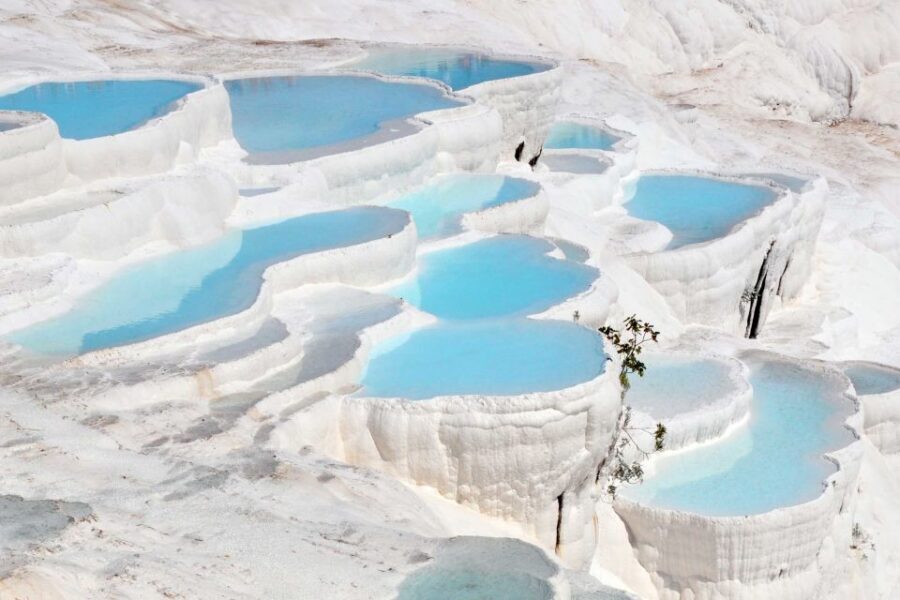
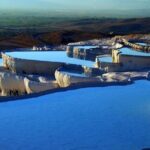
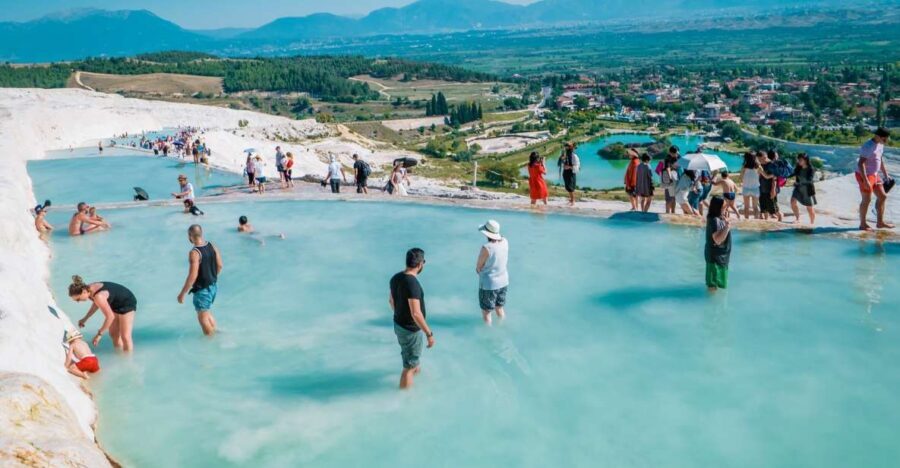
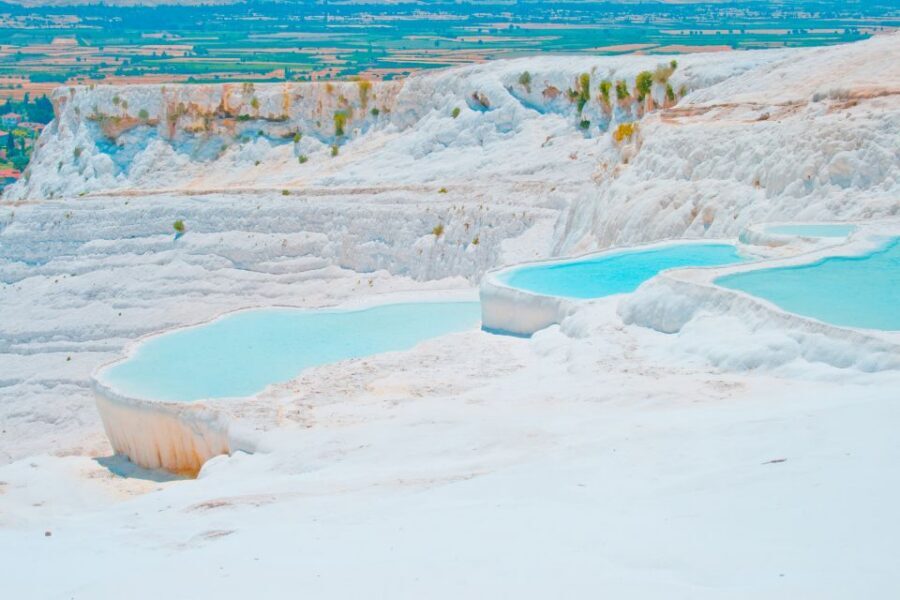
Pamukkale means cotton castle, a name tied to the snow-white appearance of the calcium terraces. The site sits in a thermal area where the water temperature ranges from about 30°C up to 100°C, fed by 17 hot springs.
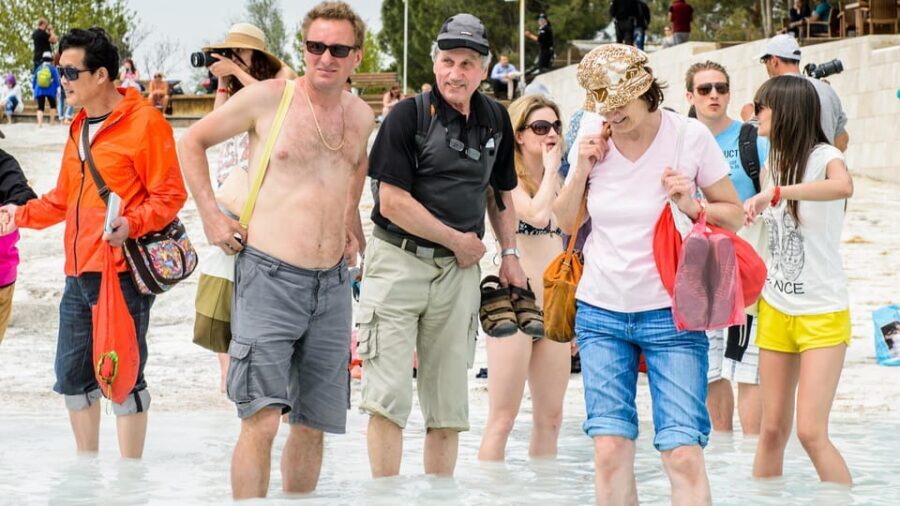
When you arrive, you’ll do a mix of guided touring and walking, with time for photos. This is the part people remember most because it feels slightly unreal. The terraced look comes from mineral-rich thermal water depositing calcium over time, creating those smooth, bright steps.
Practical tip: bring comfortable shoes. The calcium can be slick and the walking adds up. Also pack sunglasses and a sun hat. Even if it’s cool in the morning, the terrace sun can hit hard while you’re standing still for photos or listening to guide explanations.
Other Pamukkale Hierapolis tours we've reviewed in Antalya



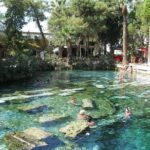
Thermal pools: foot baths, small pools, and 30°C comfort
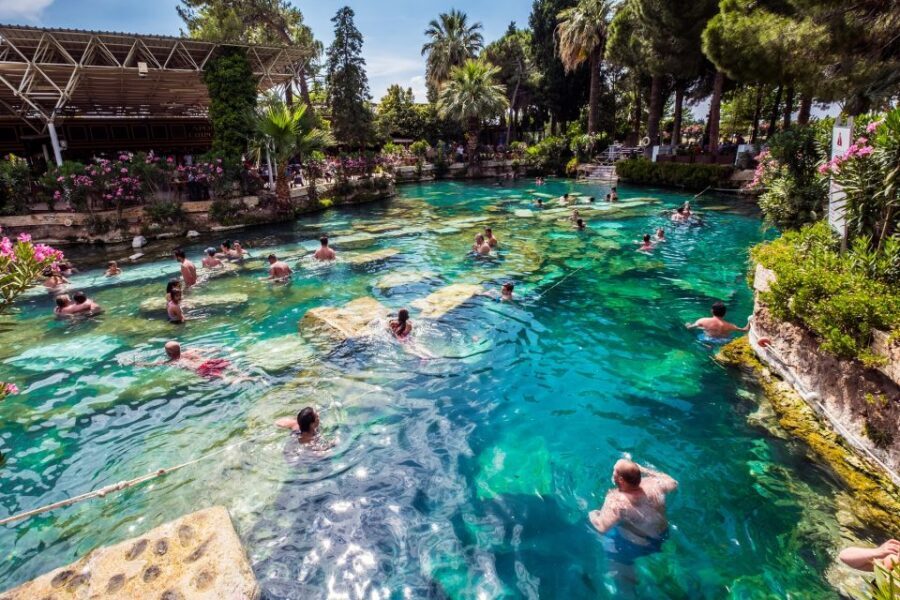
Swimming is listed as optional, and the tour gives you access to small thermal pools that you can explore. The number and location of pools you can use may depend on weather conditions, so don’t assume every pool will be accessible every day.
A key detail: the thermal water is around 30°C, which is warm enough to feel soothing without turning into a sauna. It also makes the whole experience more comfortable if you’re not used to hot springs.
Another thing to know: there are local legends about healing properties—things like digestion, rheumatism, circulation, skin conditions, and more. You should treat that as folklore, not medical advice. Still, it’s part of the region’s identity, and your guide can explain how ancient spa culture blended wellness myths with real-world thermal soaking.
What to pack so you enjoy this portion:
- Swimwear + towel
- T-shirt if you get sunburn-prone while sitting in and out of the water
- Camera because the pool area and terrace views are photo-friendly
Hierapolis: stepping through the holy city’s ruins
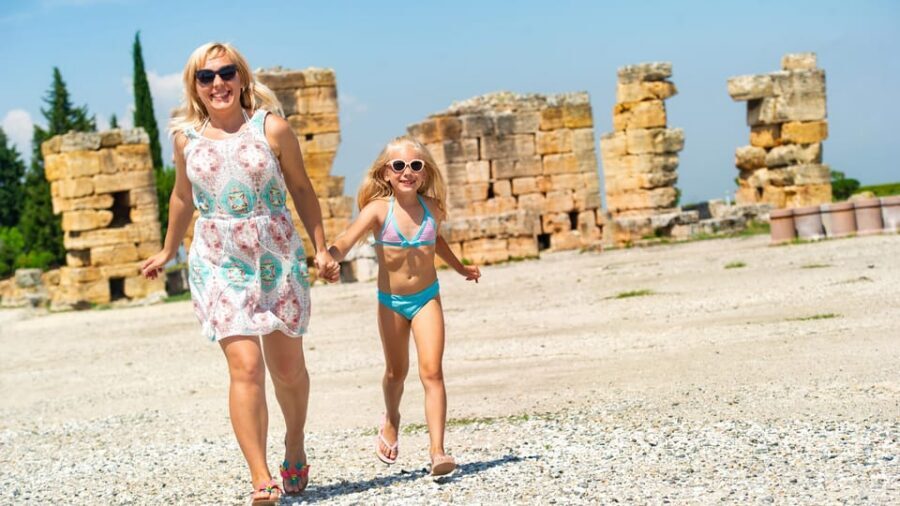
After Pamukkale, the day pivots to Hierapolis, literally tied to the idea of a holy city. The ancient spa town grew right beside the hot springs and became a major center in the ancient world.
Hierapolis is large enough that it doesn’t feel like a token stop. It stretches about 2.7 km long and roughly 0.6 km wide, with ruins up to around 0.16 km high (as described in the site background). The sheer scale is why it works as a guided experience: you can’t connect all the dots on your own, but with a guide you can understand how the city was laid out.
Guided highlights in the program include:
- The Main areas of Hierapolis you can walk through
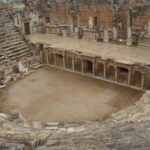
- The ancient theater, famous for its presence in the city
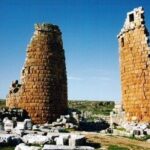
- The Temple of Apollon area
- The Hierapolis Gate of Domitian
- The Necropolis (city of the dead)
If you’re into history, this is where the guide earns their keep. Different guides do it differently, but the consistently praised style is clear explanations and a calm approach—people specifically called out guides such as Mery, Baran, Fatima, Sunay, Mellisa, Su, and Gamzee for making the history easy to follow.
Temple of Apollon, Domitian Gate, and the story behind the stone

The Temple of Apollon stop isn’t just a postcard. It’s a way to see how religious life sat inside a spa town. Hierapolis grew under different powers, and your guide can connect the dots between Greek and Roman eras.
The Gate of Domitian gives you a different feel: it’s more structural and political, a reminder that Hierapolis wasn’t only about healing water. It was also about governance, wealth, and the kind of architecture that told people who was in charge.
One reason I recommend a guided format here is that ruins can look like random rocks until someone helps you place them. With the guide walking you from point to point, the day feels less like wandering and more like reading a time-lapse of ancient life.
Necropolis of Hierapolis: the quieter, more moving part
Not every site on earth is built to make you feel energetic. The Necropolis of Hierapolis is the opposite. It’s the part of the day that shifts you away from spa glamour and into the reality of ancient burial traditions.
This stop works best if you slow down. Use it as a mental reset between Pamukkale’s mineral whites and Hierapolis’ major monuments. It’s also where you can appreciate the city’s long timeline: a place that attracted people in life and then kept memory in stone after.
Cleopatra’s Antique Pool: what to do when it’s closed
Cleopatra’s Antique Pool is one of the most famous names attached to Pamukkale’s ruins. But here’s the important reality check: it was not literally owned by Cleopatra. Instead, it’s an artificial pool built on top of ancient columns that fell during an earthquake.
In the tour info right now, Cleopatra’s pool is temporarily closed for renovations, and access to the pool area isn’t available. That means you should not plan your entire day around swimming there.
Still, you can still enjoy the surrounding ruins and the “why this place got famous” story. If swimming is your top priority, aim to be flexible and treat Cleopatra’s pool as bonus—especially when the closure is announced.
Lunch at Pamukkale: included, filling, and easy on decision fatigue
Lunch is included and timed so you’re not starving while you wait for a bus. The meal is described as a buffet with different choices, and a vegetarian option is available.
A practical tip: eat earlier rather than later in the lunch window if the group schedule allows. When you’ve got thermal water on your schedule afterward, you don’t want to feel heavy or rushed. Also, remember drinks are not included, so bring extra cash or plan to buy water.
People praised the lunch as tasty, clean, and well-organized, which matters on a long day. A good buffet can turn a stressful logistics day into a relaxed one.
Shopping in Denizli: how it fits without hijacking the day
The itinerary includes shopping time in Denizli Province. In practice, this is the stretch where you can decide how much you want to do. It’s not the highlight like Pamukkale or Hierapolis, but it gives you a chance to pick up small souvenirs without needing extra transport.
Keep expectations realistic: shopping time is usually time-limited. So if you want gifts, focus on simple, portable items rather than thinking you’ll browse forever.
What I’d bring (and what I’d avoid) for comfort
This tour is one of those days where comfort directly affects your enjoyment. Here’s the kit that matches the program:
- Comfortable shoes (important for terrace and ruin walking)
- Sunglasses + sun hat
- Swimwear + towel (if thermal pool time is available)
- Camera
- T-shirt (for sun and quick shade between stops)
What to avoid:
- Heavy shoes you can’t break in
- Forgetting water and then wishing you had it on the drive
The early morning start can make you feel the temperature shift, so layering can help even if the afternoon warms up.
Should you book the Antalya Pamukkale & Hierapolis small group tour?
Book it if you want one classic Turkey day trip with a clear structure: Pamukkale terraces, thermal pools, and Hierapolis monuments in a single outing from Antalya. The included lunch and guided interpretation make it feel efficient without turning it into a checklist.
Think twice if:
- You’re sensitive to long drives and an early start.
- Cleopatra’s pool is a must-do for you, and you’re not comfortable with it being temporarily unavailable due to renovations.
- You hate paying add-on site fees. The €30 entrance fee for Pamukkale and Hierapolis is extra.
My take: if you’re in Antalya and you’re choosing only one “big distance” day trip, this is a strong pick. It’s built around the main draws that make Pamukkale and Hierapolis famous, and the guide-led storytelling is the difference between seeing ruins and actually understanding them.
FAQ
How long is the Antalya to Pamukkale and Hierapolis tour?
It runs about 12 hours, starting with an early pickup and returning to Antalya around 6 PM.
Where does pickup happen?
Pickup is available from two Antalya options: Antalya (including Konyaaltı) locations.
Is lunch included?
Yes. Lunch is included, and there is a vegetarian option available.
What tickets or entrance fees are not included?
Entrance fees for Pamukkale and Hierapolis are not included and are listed as about €30.
Can I swim at Pamukkale during this tour?
Swimming is optional. You can access small thermal pools, depending on weather conditions.
Is Cleopatra’s Antique Pool included?
Cleopatra’s Antique Pool is listed as part of the experience, but the tour info also states it is temporarily closed for renovations, so pool access may not be available.
What should I bring for the day?
Bring comfortable shoes, sunglasses, a sun hat, swimwear, a towel, and a camera (plus a t-shirt if you want sun coverage).
Is there a guide and language offered?
Yes. A live bilingual tour guide is included, and the tour is offered in English.