REVIEW · ANTALYA
Antalya: Perge Ancient City Tour
Book on GetYourGuide →Operated by Antalya Local · Bookable on GetYourGuide
Perge has a way of feeling close to real life. In just 3.5 hours, you’ll walk through a former Pamphylia capital and spot the kind of grand public buildings—theater, stadium, colonnaded streets—that tell you how people gathered, worked out, shopped, and bathed.
I like this tour because it’s built around a guided walkthrough, not a rushed stop-and-snap affair. I love how the route lines up major monuments in a logical flow, and I love that your guide connects the stones to everyday life in ancient Perge. One drawback: there’s not a lot of shade, so you’ll want to plan for heat and sun.
In This Review
- Key Things I’d Prioritize
- Perge’s Big Idea in 3.5 Hours
- Getting There From Antalya’s City Center
- Entrance Tickets: The One Thing You’ll Pay Separately
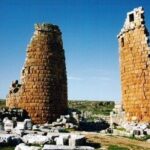
- City Gate and Monumental Layout: Getting Oriented Fast
- Ancient Theater and Stadium: Where Crowds Would Have Roared
- Colonnaded Street and Fountains: The City’s Daily Stage
- Agora and Basilicas: Civic Life in Public View
- Gymnasion and Baths: Routine, Health, and Social Time
- Church Areas and Extra Stops: How the Tour Fills the Gaps
- The Guide Makes the Difference: Onder and Yonder’s Style
- What to Pack (Because Perge Doesn’t Slow Down for Weather)
- Who This Tour Fits Best
- Value Check: Does $56 Make Sense?
- Should You Book the Antalya: Perge Ancient City Tour?
- FAQ
- Where do we meet for the Perge tour from Antalya?
- How long is the tour?
- Is the Perge Ancient City entrance ticket included?
- Does the tour include pickup and drop-off?
- What language is the tour guide?
- How big is the group?
- Is ticket-line time included in the experience?
- What should I bring for the day?
- Is there much shade at the site?
- Is the tour wheelchair accessible?
- Can I cancel and get a refund?
- Is there a reserve and pay later option?
Key Things I’d Prioritize
- Small group (up to 10) means you’re not swallowed by the crowd.
- Licensed English guide keeps the ruins readable, with explanations that make the layout click.
- Skip the ticket line can save time at the entrance, even though you still buy your ticket at the gate.
- Model of the city helps you understand where everything was before you start walking.
- Old-school public spaces like the agora, baths, gymnasion, and colonnaded street give you a full civic picture.
Perge’s Big Idea in 3.5 Hours
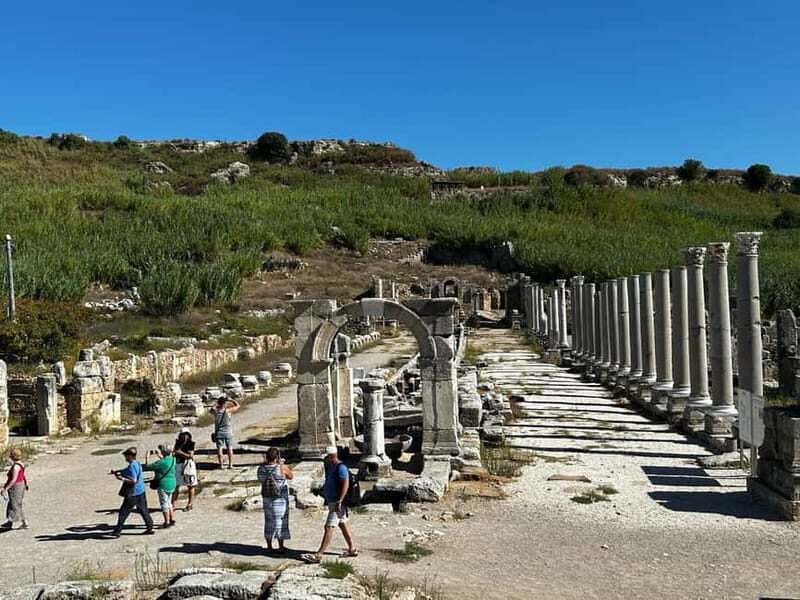
Perge isn’t one lone monument. It’s a whole ancient city plan that you can follow while your guide points out what each space was for. You’ll start with the essentials—city gate areas and major civic buildings—then move through entertainment, daily routine, and public architecture.
The time matters. At 3.5 hours, you get enough walking to feel the place, but not so much that you’re fighting the day. It’s also an easier add-on when you’re staying in Antalya and want something beyond a beach afternoon.
And yes, it’s the kind of place where you’ll end up taking photos even if you’re not trying. The ruins are monumental. The details—doorways, street lines, the scale of the theater and stadium—help your brain understand how impressive this city was when it was active.
Other Antalya tours we've reviewed in Antalya



Getting There From Antalya’s City Center
Your tour starts with pickup from Antalya city center, meeting at the Shell Gas Station. That’s a helpful detail because it removes the stress of figuring out local transport right before you hit ruins mode.
Then you travel to Perge with the group. The ride itself is usually just the calm lead-in to the day. Once you arrive, you’re on time for the walk and photo stops, without having to coordinate tickets and entry on your own.
This “tour-to-site” setup is part of the value. You spend more of your energy looking at Perge and less time managing logistics in a place where signposting may not be the easiest in every direction.
Entrance Tickets: The One Thing You’ll Pay Separately
Here’s the key practical point: entrance to Perge Ancient City is not included. You buy your ticket at the gate, so keep a little cash or a card ready.
Good news: the tour includes skip the ticket line, so you’re not stuck waiting while your morning evaporates. Still, you’ll want to treat entrance like a quick, standalone stop at the start.
Budget-wise, the listed price of $56 per person makes sense mainly because you’re paying for the guided experience and the convenience of pickup/drop-off. You’re not paying for the grounds admission itself. If you compare this to self-guided entry, the question becomes simple: do you want explanations and context? For many people, that’s where the money goes.
City Gate and Monumental Layout: Getting Oriented Fast
Before you get lost in columns and arches, you need bearings. This is where the tour really earns its keep.
You’ll start by moving through the key entrance and gate areas, then transition into the big public zones. Even if you’re no architecture expert, you’ll be able to read the city as a connected whole. Your guide helps you understand how monumental gates and civic structures set the tone for what came next.
You’ll also see a model of the city, which is a smart way to set your mental map. Without it, ruins can feel like random segments of stone. With it, you start to connect the dots—where people would have walked, gathered, and moved between spaces.
Ancient Theater and Stadium: Where Crowds Would Have Roared
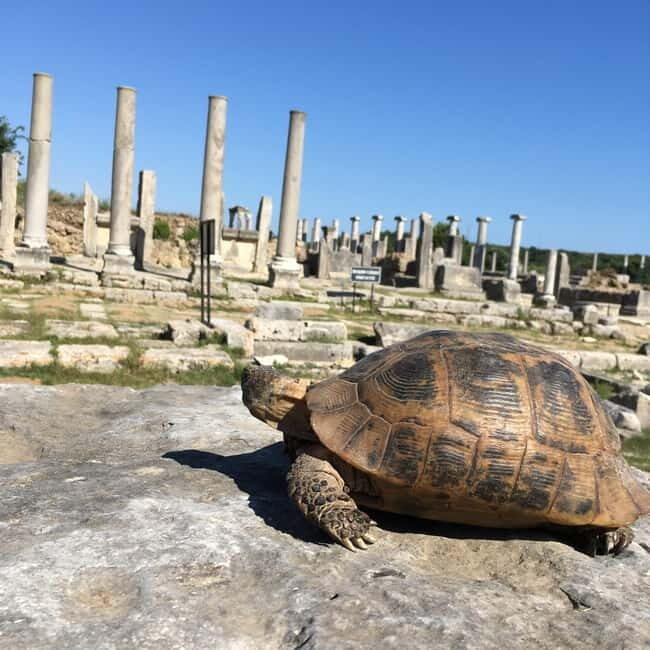
The theater and stadium are your “okay, this was serious” stops.
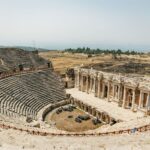
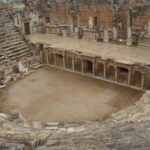
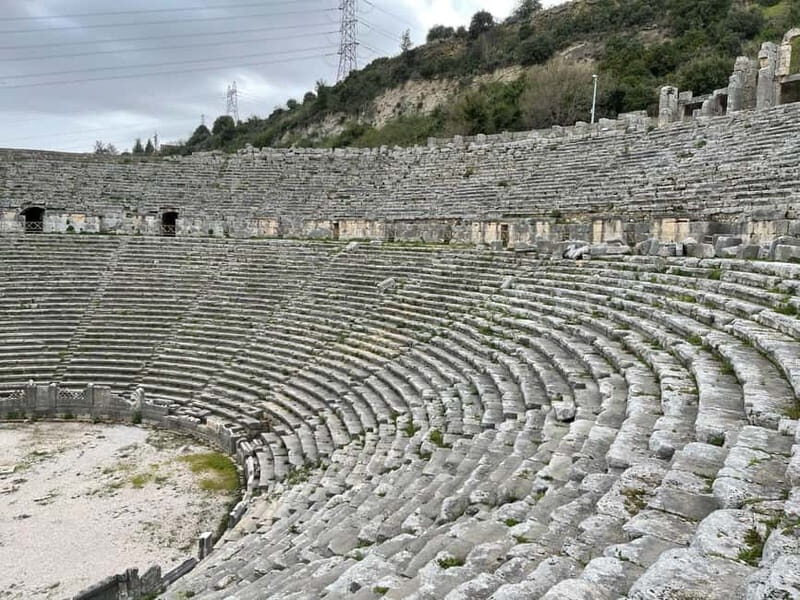
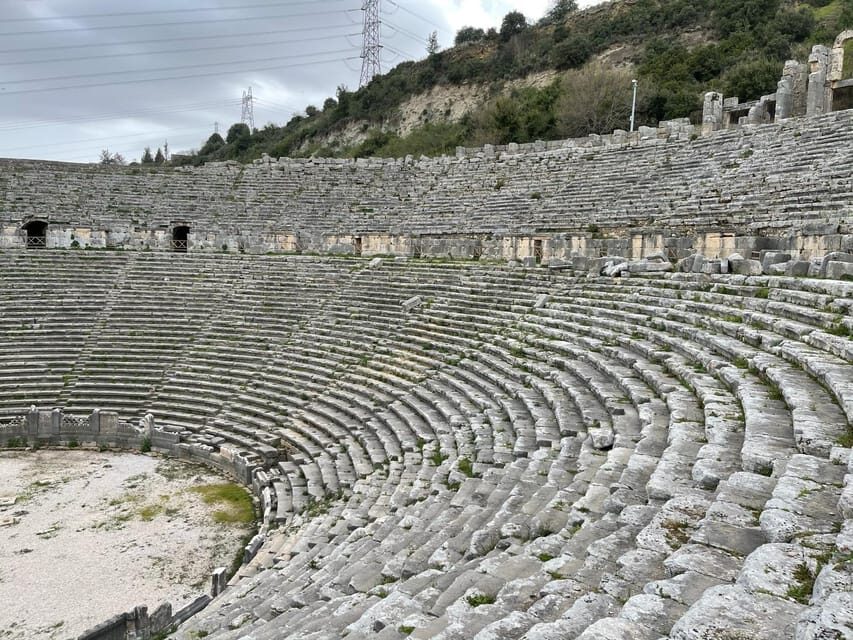
The ancient theater is where the city flexed its entertainment side. Standing in the area while looking across the space makes it easier to picture performances and gatherings that brought people together in a big, structured way.
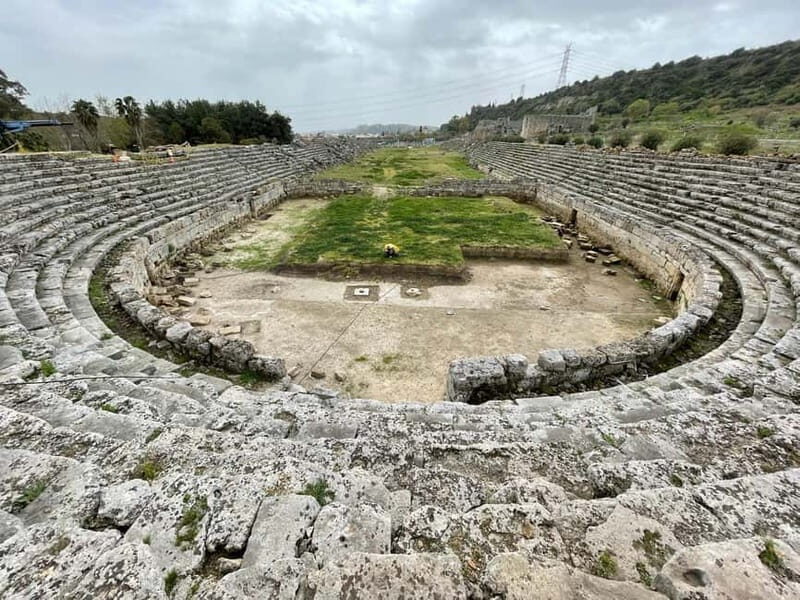
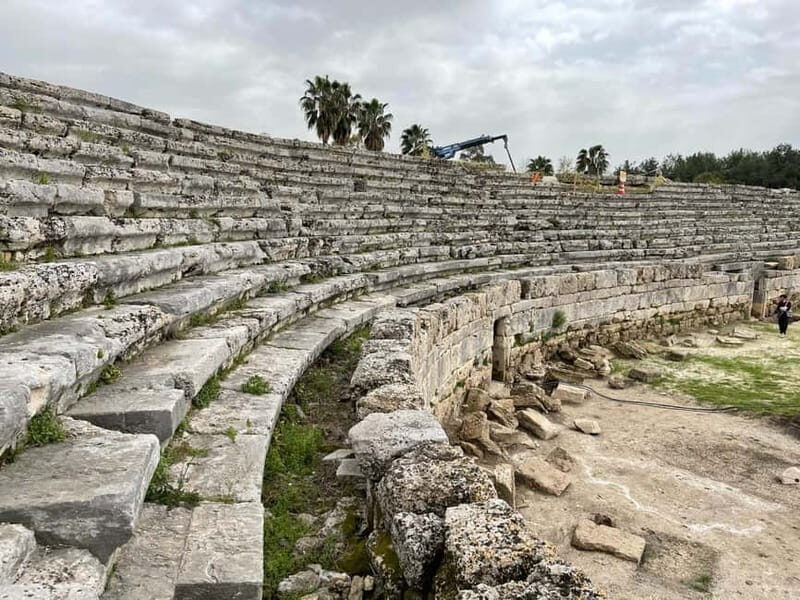
Then the tour shifts to the stadium. It’s not the sort of place where you can miss the scale. Even today, the built form gives you a clear idea of how spectators would pack in to watch events.
What I like here is the way a guide can turn “ruins” into “routine.” You don’t just see seating and stone lines. You start to understand why these places mattered to daily life in a city that was once the capital of the Pamphylia Region.
Other city tours we've reviewed in Antalya




Colonnaded Street and Fountains: The City’s Daily Stage
After the major crowd buildings, you move into the spaces where people moved day to day.
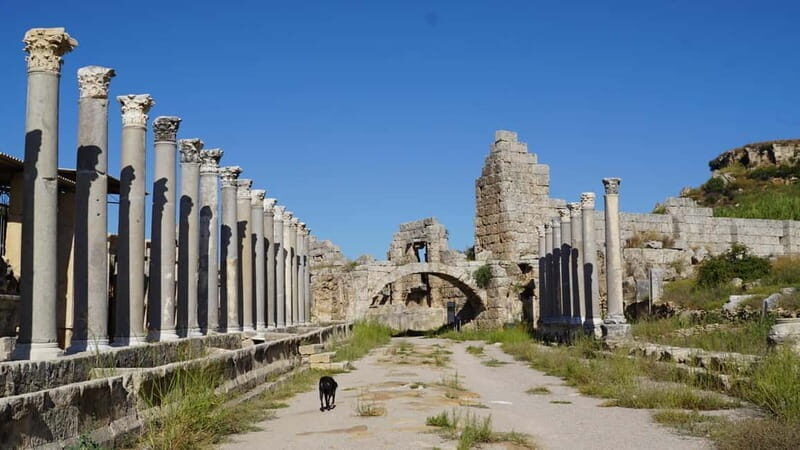
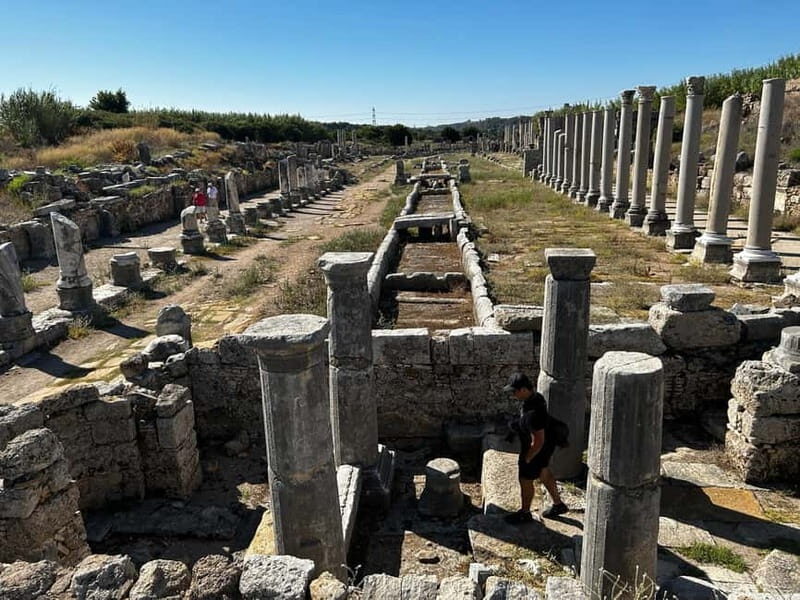
The colonnaded street is especially worth your attention. Look at the long walkways and think about the flow of pedestrians. A colonnaded street wasn’t only about beauty. It was a practical connector for civic life—where you’d pass shops, meet friends, and move between important buildings.
Then you’ll see fountains. In cities like this, fountains weren’t just decorative. They also make sense as part of public comfort and utility. On a hot day, it’s hard not to appreciate why access to water would shape how people used public space.
This section is where I recommend slowing down for photos. Don’t just shoot straight ahead. Angle your camera so you capture the street rhythm—the repeating columns and the way the buildings frame your view. It’s the kind of photo that actually looks like a place, not just a pile of old stone.
Agora and Basilicas: Civic Life in Public View
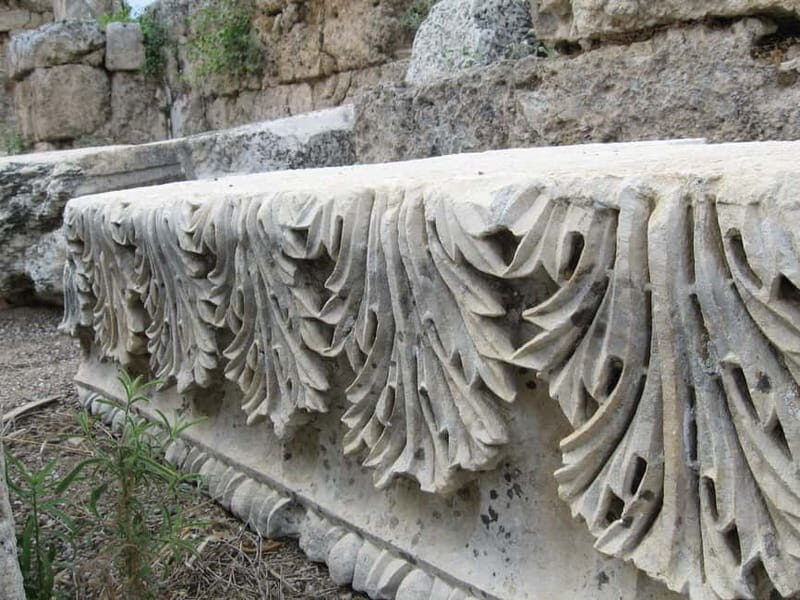
Next comes the heart-beat zone: the agora and nearby monumental religious/civic spaces such as the basilica.
The agora is where you expect social life, business, and civic conversations. Even if you’re not reading every architectural feature, the purpose becomes clearer as your guide points out how the spaces functioned.
The basilica adds another layer. It helps show that Perge wasn’t only entertainment and trade. It had major institutional spaces, places tied to community life and public gathering.
This is also a good moment to ask yourself what kind of ancient city you’re standing in. With theater, stadium, agora, and colonnaded streets together in one tour, Perge stops being a site you visited and becomes a city you understand.
Gymnasion and Baths: Routine, Health, and Social Time
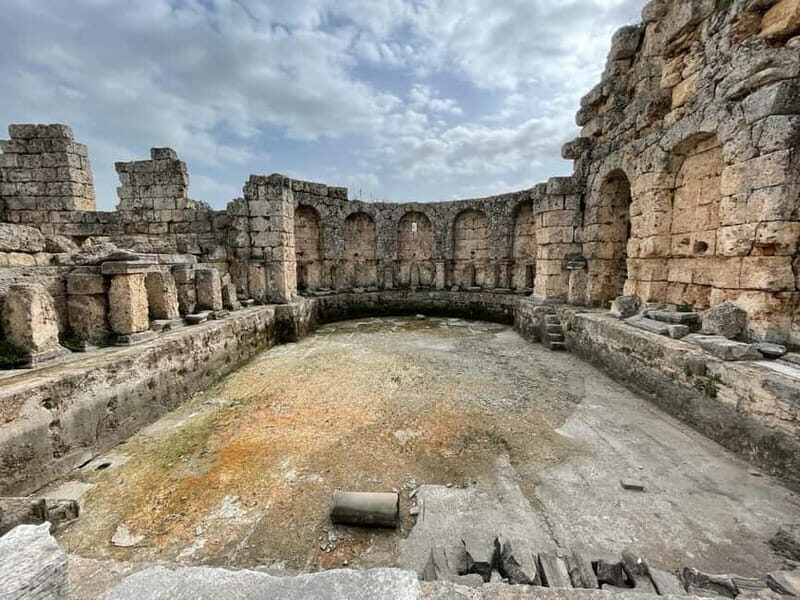
If the theater is about spectacle, the gymnasion and baths are about routine.
The gymnasion area helps you connect the city to daily habits—movement, training, and the idea of physical culture as part of social life. Then you move to the baths, where the whole tone changes. Baths are one of those places that tell you how people relaxed, refreshed, and spent time together.
I like that this portion of the tour rounds out the city. Many ruin tours over-focus on one big building. Here, you get the full arc: entertainment, civic space, then daily well-being and community time.
Also, baths and gymnasion areas tend to have lots of angles for photos. If you want something that looks different from the usual theater shots, aim your camera for details around doorways, rooms, and stone surfaces as you walk through.
Church Areas and Extra Stops: How the Tour Fills the Gaps
The tour includes additional sights beyond the headline monuments, including a church stop (and more). This matters because it hints at how the city’s story stretched beyond one era of use.
I treat these “extra” stops as the glue that keeps the tour from feeling like a checklist. They help you see Perge not only as an ancient plan, but as a place with evolving life over time.
The guide also helps you connect these sections so you don’t feel like you’re collecting random ruins. Instead, the stops feel like a sequence with a reason.
The Guide Makes the Difference: Onder and Yonder’s Style
This is where the best parts of the experience show up in real life.
In the English-language tours, guides like Onder and Yonder have a knack for making Perge feel lived-in. They don’t just point at stones. They explain how the city worked and what daily life may have looked like—so your brain stops treating ruins as abstract shapes.
One detail I really appreciate is how guides show care for the group in practical ways. For example, there’s a story of Onder sharing an umbrella to help protect a child from the sun. It’s a small moment, but it tells you the day isn’t run like a factory line. You’re traveling with someone who actually wants you to have a good time.
If you tend to get bored when tours sound like memorized facts, you’ll likely enjoy this one. A strong guide can turn a short visit into a real sense of understanding.
What to Pack (Because Perge Doesn’t Slow Down for Weather)
Perge is an outdoor walk with uneven ground. Bring comfortable shoes first. Then bring the sun basics: a hat and sunscreen.
Also bring water. The tour notes that you may get thirsty and there isn’t much shade, so plan like you’re going to sweat a bit. A small bottle is fine, but don’t count on the site being a place where you’ll suddenly solve hydration at will.
Bring a camera too. Even if you think you’ll skip photos, Perge will tempt you. The theater and street sections give you great composition angles.
And one simple rule: no smoking. It’s an outdoor site, so just follow the obvious.
Who This Tour Fits Best
This is a good match if you want:
- A guided walk through major ruins, not a solo scramble.
- A small-group pace where you can hear the guide without shouting over other groups.
- A compact route that covers theater, stadium, gates, agora, colonnaded street, fountains, gymnasion, baths, and a church stop.
It may be less ideal if you:
- Need wheelchair-friendly routes. The tour is not suitable for wheelchair users and isn’t aimed at people with mobility impairments.
- Have a very hard time with sun and heat. There’s not a lot of shade, so you’ll feel it outdoors.
If you’re the type who likes to understand what you’re looking at, this tour will feel worth it fast.
Value Check: Does $56 Make Sense?
At $56 per person, you’re paying for several things at once:
- Pickup and drop-off from Antalya city center
- A licensed English guide
- A small group limited to 10
- Skip the ticket line
- A structured route that hits the key parts of Perge
Entrance tickets are extra, which is the main way the price stays reasonable. Once you factor in your own time cost and how hard it can be to piece together a guided feel on your own, the math usually comes out in favor of booking—especially if you want history tied to daily life, not just architectural facts.
If you already know your way around ancient sites and don’t care for interpretation, you could DIY. But if you want the place to make sense while you’re there, the guide is the difference-maker.
Should You Book the Antalya: Perge Ancient City Tour?
I’d book it if you want a short, high-impact ruins experience with organized context and a guide who keeps the story moving. The small group size helps a lot, and the route covers the main “wow” buildings plus the daily-life spaces like the baths and gymnasion.
If you dislike sun exposure, plan your day around it. Wear your shade kit, hydrate, and keep your expectations realistic: this is an outdoor ancient city, not an air-conditioned museum.
Overall, this tour is a practical way to see Perge without turning your day into a stressful logistics puzzle. You’ll leave with photos, sure—but more importantly, you’ll have a clearer sense of how the city functioned.
FAQ
Where do we meet for the Perge tour from Antalya?
You meet at the Shell Gas Station. The tour ends back at the same meeting point.
How long is the tour?
The duration is listed as 3.5 hours. Starting times vary, so you’ll want to check availability.
Is the Perge Ancient City entrance ticket included?
No. Entrance is not included, and you purchase your ticket at the gate.
Does the tour include pickup and drop-off?
Yes. Pickup and drop-off are included from Antalya city center.
What language is the tour guide?
The live tour guide speaks English.
How big is the group?
It’s a small group limited to 10 participants.
Is ticket-line time included in the experience?
Yes, the tour includes skip the ticket line.
What should I bring for the day?
Bring comfortable shoes, a hat, a camera, sunscreen, and water.
Is there much shade at the site?
The tour info notes there is not a lot of shade, so sunscreen and/or a hat are important.
Is the tour wheelchair accessible?
No. It is not suitable for wheelchair users and not suitable for people with mobility impairments.
Can I cancel and get a refund?
Yes. You can cancel up to 24 hours in advance for a full refund.
Is there a reserve and pay later option?
Yes. You can reserve your spot and pay nothing today (reserve now & pay later).