REVIEW · ANTALYA
Perge, Aspendos and Waterfalls Sightseeing Tour
Book on Viator →Operated by Neon Tours · Bookable on Viator
Ancient ruins. Real payoff.
This day trip strings together some of Turkey’s best Roman and pre-Roman sights in one smooth loop, plus a waterfall break. You start with Perge’s sculpted city life (and the stories behind it), move to Aspendos’ famous theater, then finish in Side with ruins, a museum, and beach time.
Two things I love here are the chance to see Perge’s major public spaces—like the Agora and baths—and the way Aspendos still feels like a working stage from the Roman world. One thing to keep in mind: service quality can vary, with a few issues showing up around pickup timing, vehicle comfort (especially air-con), and even whether the theater or exact waterfall stop matches what you expected on that day.
In This Review
- Key highlights you’ll feel on the ground
- Why this route works in Antalya: big names, not random stops
- Price and time: what $115 buys you (and what it doesn’t)
- Getting picked up: how comfort and timing usually play out
- Perge Ancient City: the best “wow” per minute
- Aspendos Ruins: when “best-preserved” actually means something
- Side: ruins, beaches, and the Temple of Apollo area
- Manavgat (Kursunlu) waterfalls: a short scenic reset
- Lunch by the river: plan for it, and don’t overpromise
- Shopping stops: why they can help or annoy you
- Guides make or break the day: the names you’ll hear
- Who should book this tour, and who should skip it
- Should you book this Perge, Aspendos and waterfalls tour?
- FAQ
- What time does the tour start?
- Does this tour include hotel pickup and drop-off?
- Are tickets or entrance fees included?
- Will I get lunch on this tour?
- Is the tour suitable for children?
- What happens if the weather is bad or a museum closes?
Key highlights you’ll feel on the ground
- Perge’s headline ruins: city gate, Column Street, Agora, stadium, Roman bath areas, and theater details
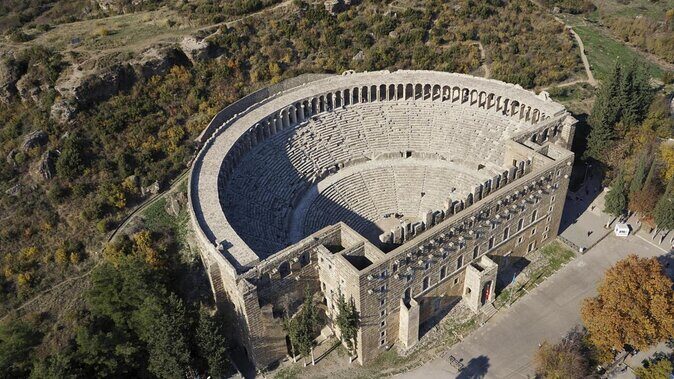
- Aspendos theater time: one of Anatolia’s best-preserved Roman theaters, typically worth the stop
- Side’s mix of ruins and downtime: Temple of Apollo area, Agora, fountain, necropolis, plus beaches and free time
- Manavgat/Kursunlu waterfall reset: a short scenic break to cool off after archaeological walking
- Group size capped at 20: easier pacing than some bigger coach tours, with guided context where it counts
Why this route works in Antalya: big names, not random stops
Antalya has plenty to do, but it can be hard to pick what matters if you only have one full day. This tour has a strong logic: it hits three serious archaeology stops—Perge, Aspendos, and Side—then adds a scenic decompression moment at the waterfalls.
I also like how the guide’s job is basically to turn piles of stones into something readable. At Perge you’re not just wandering; you’re guided through where the city’s public life happened—market space, gym/bath culture, and the places where people gathered. Then at Aspendos, you’re primed for what makes the theater special before you start noticing the details.
And yes, it’s a lot in one day. That can be a plus if you’re short on time. If you prefer slow travel and wandering without a schedule, you may feel rushed.
Other Aspendos tours we've reviewed in Antalya

Price and time: what $115 buys you (and what it doesn’t)
At $115 per person for about 8 hours, you’re mainly paying for hotel pickup/drop-off, a local guide, and an air-conditioned vehicle that transports you between sites that would be annoying to coordinate on your own.
Two entrance-fee notes matter for value. Admission is included for Perge and Aspendos, while Side is listed as free admission. The waterfalls stop is also free. So your money goes to logistics and guided interpretation more than paying gate after gate.
What you should budget for separately is food and drinks. The day includes a lunch stop along the river, and some people call the lunch decent to superb, but the tour info still says meals aren’t automatically included unless stated otherwise. If you’re hungry, bring a little snack strategy for the long gaps.
A good reality check: some days include extra timing variables (weather, traffic, and occasionally site closures). One traveler noted the Aspendos theater was closed for renovation at their time, so your experience can shift slightly even if the plan stays the same.
Getting picked up: how comfort and timing usually play out
Your day starts at 9:00 am with hotel pickup in Antalya. The tour runs with a maximum group size of 20, which keeps the “herding cats” factor lower than some larger bus tours.
The big practical question is reliability. Most of the day’s appeal depends on getting moving on time, and a few experiences weren’t smooth: one person waited around 45 minutes after the scheduled pickup despite repeated calls, and another mentioned a minivan that wasn’t as comfortable or clean as they expected. On the other hand, several people praised comfortable transport and air-conditioning working well.
My advice: be ready a bit early, keep your phone handy, and don’t assume the first van will arrive like clockwork. If you’re sensitive to delays, plan your expectations like you would for any shared tour bus in a busy tourist city.
Also, the tour uses mobile tickets, which is convenient—just make sure your phone battery behaves.
Perge Ancient City: the best “wow” per minute
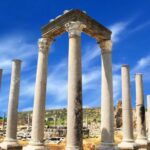
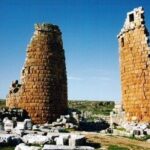
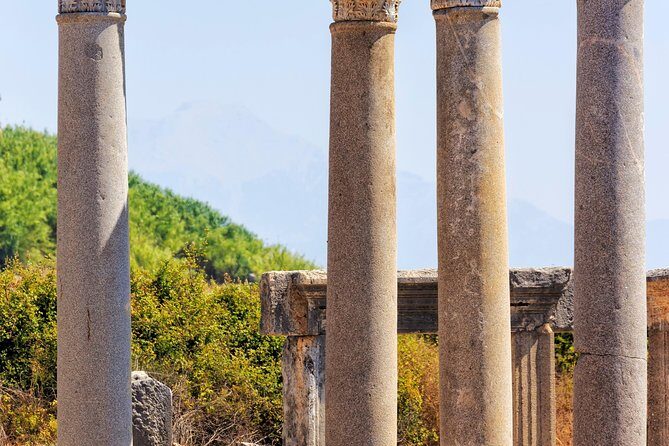
Perge is the reason this tour earns its keep. It’s a major archaeological site about 15 km east of Antalya, and the city’s story stretches far back, including a Bronze Age acropolis.
What you’ll see is the core of a real Roman city laid over older layers. In your time here (about 2 hours), the guide typically focuses you on the city gate, Agora, Roman bath areas, Column Street, and the stadium. You’ll also get a sense of how public life worked—where people met, exercised, shopped, and attended events.
One detail I like from the tour description: Perge is tied to statues found and later displayed in the Antalya Museum. So when you see fragments of ornamentation and carved elements on-site, you can connect it to the bigger museum story instead of treating it as random ruins.
Expect some teaching moments too. The tour includes the St. Paul connection—his missionary journey to this region—and it frames the settlement’s deeper roots, including references to much earlier habitation (the tour text mentions a date around 1500 BC for the broader settlement history).
Practical tip: Perge is a ruin walk with uneven ground. Wear shoes you don’t mind getting dusty. If it’s hot, you’ll feel it. People called the guide enthusiastic and the context helpful, especially for history-minded visitors who want more than a quick photo stop.
Aspendos Ruins: when “best-preserved” actually means something
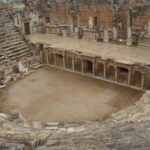
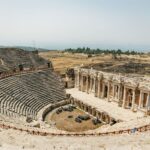
Aspendos is the star theater stop. The tour brings you to one of Anatolia’s best-preserved Roman theaters, and you’ll spend around 1 hour there.
What makes Aspendos feel different from a lot of ancient sites is how intact the theater is. Even before you start reading every architectural line, you can see the structure is built for crowds. Your guide also points out theater-related details like ornate marble relief elements and design patterns, plus stadium elements in the same broader Perge-to-Aspendos historical arc.
One note from real-world experience: there can be days when Aspendos doesn’t operate as expected due to closures for renovation. That doesn’t mean you won’t enjoy the architecture, but it can affect what you can see up close. If you’re traveling at a time when closures are possible, stay flexible and focus on what you can still access.



Side: ruins, beaches, and the Temple of Apollo area
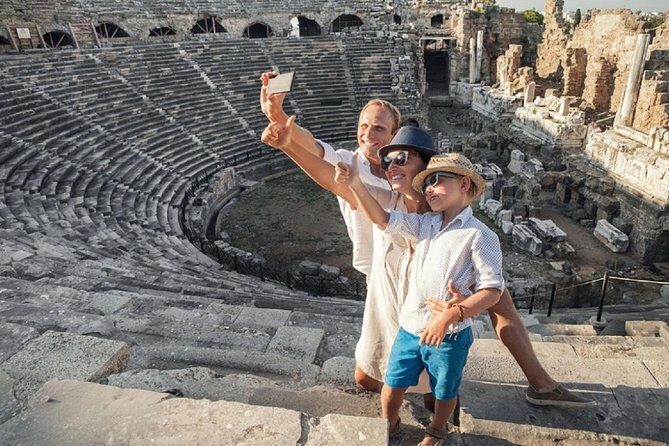
Side is a classic finish because it mixes serious archaeology with an actual vacation town vibe. The name is tied to pomegranate in the tour description, and the ancient settlement was an important harbor. Today it’s known for ruins, shops, and sandy beach areas—so you can switch from Roman stone-muse mode into stroll mode.
You typically get about 3 hours here, with Side admission listed as free. You’ll visit a set of major monuments with your guide, including the Temple of Apollo area (near the sea), the Agora, a fountain, and the Necropolis. The tour also highlights the extensive Roman baths complex, now functioning as a museum with one of Turkey’s finest archaeological collections (as described in the tour info).
Side’s timing is a big deal. Some visitors want more time to roam on their own, and the tour usually builds in time to explore after the guided segment. Still, one person felt the pace didn’t leave enough freedom in Side, largely due to an extra passenger causing tighter scheduling. That’s not something you can control, but it’s why I suggest bringing a “plan B”: decide what your top two Side priorities are (museum vs. theater vs. beach walk) so you don’t waste your limited time.
Beach time isn’t the whole point, but it’s a nice way to reset your legs after Perge and Aspendos.
Manavgat (Kursunlu) waterfalls: a short scenic reset
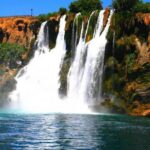
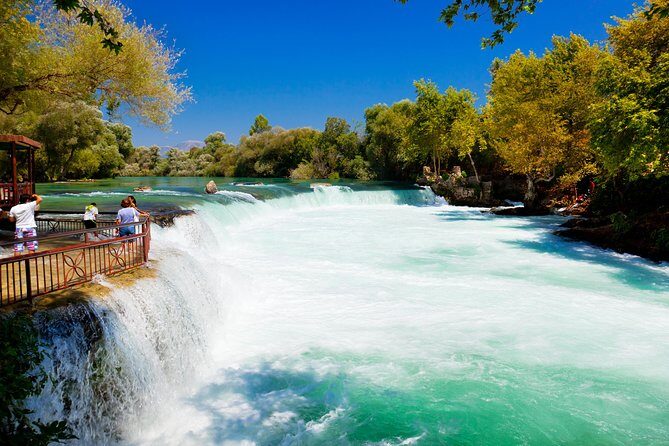
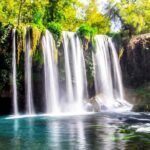
The waterfalls stop is listed as Kursunlu or Manavgat Waterfalls with a quick 25-minute visit and free admission. In practice, this is where the tour gives you a breather: you stop, you look, you cool down if conditions allow, and you take a few photos before rolling back into ancient-site mode.
Some people treat it as the relaxing interlude that makes the whole day feel less intense. And that’s exactly what a short waterfall break can do—turn a heavy historical day into something that also feels restorative.
A caution though: one experience noted that instead of Manavgat waterfalls they were taken to a smaller waterfall spot called Selale. The tour language includes both Kursunlu and Manavgat, so you might expect some substitution or variation depending on what’s running and how logistics work on that date.
Lunch by the river: plan for it, and don’t overpromise
There’s a lunch stop along the river between Aspendos and the waterfall/Side portion. The tour info doesn’t promise that lunch is included, but it does say you’ll stop for lunch, and multiple people described lunch positively—tasty, decent, even superb.
For a practical traveler approach: assume you’ll pay for your own meal unless your booking specifically states otherwise. If you have dietary needs, this is the moment to clarify. A long archaeological day is not the time to discover you can’t eat what’s available.
Also, since this is an 8-hour day, meal timing is usually tight. If you’re prone to getting cranky when hungry, pack a small snack just in case.
Shopping stops: why they can help or annoy you
Shopping is a mixed bag on this tour, and the differences matter.
In one case, someone felt the day included an unplanned emphasis on shopping, including a high-end jewelry store, which cut into their enjoyment of ruins. Another person described a leather shop and a fashion show happening as part of the day. Yet other experiences said shopping stops did not happen and that the day stayed strictly historical.
What you can do: decide in advance whether shopping stops are okay for you. If you hate them, ask the guide (politely) how much time is planned and what it’s for. You can also keep your own priorities straight: ruins first, then Side exploration, then beach time—so even if there’s shopping, it doesn’t erase your main goals.
Guides make or break the day: the names you’ll hear
The guide experience is where this tour shines. Several people praised guides for energy and clear explanations without turning it into a classroom. Names that came up include Erhan and Asmet, both described as enthusiastic, friendly, and strongly informative.
The flip side is that not every guide experience is equally smooth. One person said the guide’s English was hard to understand, which can turn guided context into frustration. Another described a more unprofessional experience with delays and guide behavior. Also, there were mention of tips being discussed in a way that can feel confusing to international visitors.
My practical advice: if your guide is excellent, lean in—ask quick questions at Perge and Side. If language is challenging, still ask about the “one thing to look for” at each stop. That keeps the day enjoyable even if you miss some details.
Who should book this tour, and who should skip it
This tour is a great match if:
- You want major ancient sites in one day from Antalya
- You like guided storytelling that connects Perge, Aspendos, and Side
- You can handle a full day outdoors with a few longer walks and short breaks
It may be a poor match if:
- You want complete independence and don’t want a schedule
- You’re very sensitive to pickup delays or vehicle comfort issues
- You’re traveling with very young children; the tour notes it isn’t recommended for kids 4 and under
- You need long waterfall time—this stop is short by design
The tour also says travelers should have moderate physical fitness. In other words: you’re not climbing mountains, but you are walking on uneven ground and spending hours between sites.
Should you book this Perge, Aspendos and waterfalls tour?
I think this tour is worth considering if you want maximum ancient impact with minimal planning. For first-timers in Antalya who want Perge and Aspendos on the same day, the structure is smart: major ruins first, museum and beaches in Side, and a waterfall reset at the end of the sightseeing push.
Book with your eyes open. Transport can vary, and the day can shift if air-conditioning isn’t behaving, if a site has closures, or if the exact waterfall stop differs. If you can handle that, you’ll likely come away happy—especially for the Perge-to-Aspendos theater pairing and the guided context that turns stones into a city you can actually picture.
If you’re the type who gets annoyed by shopping stops, decide what you’ll tolerate before you go and ask questions early.
FAQ
What time does the tour start?
The tour starts at 9:00 am, with hotel pickup in Antalya.
Does this tour include hotel pickup and drop-off?
Yes. The tour includes pickup and drop-off from your hotel, plus a local guide and an air-conditioned vehicle.
Are tickets or entrance fees included?
Admission tickets are included for Perge and Aspendos. Side is listed as free admission, and the waterfalls stop has free admission as well.
Will I get lunch on this tour?
The tour includes a lunch stop along the river, but food and drinks are listed as not included unless specified.
Is the tour suitable for children?
It isn’t recommended for children aged 4 and under, and children 18 and under must be accompanied by an adult.
What happens if the weather is bad or a museum closes?
The tour requires good weather. If canceled due to poor weather, you’ll be offered a different date or a full refund. If museums close, the tour notes that an alternative similar museum will be visited.